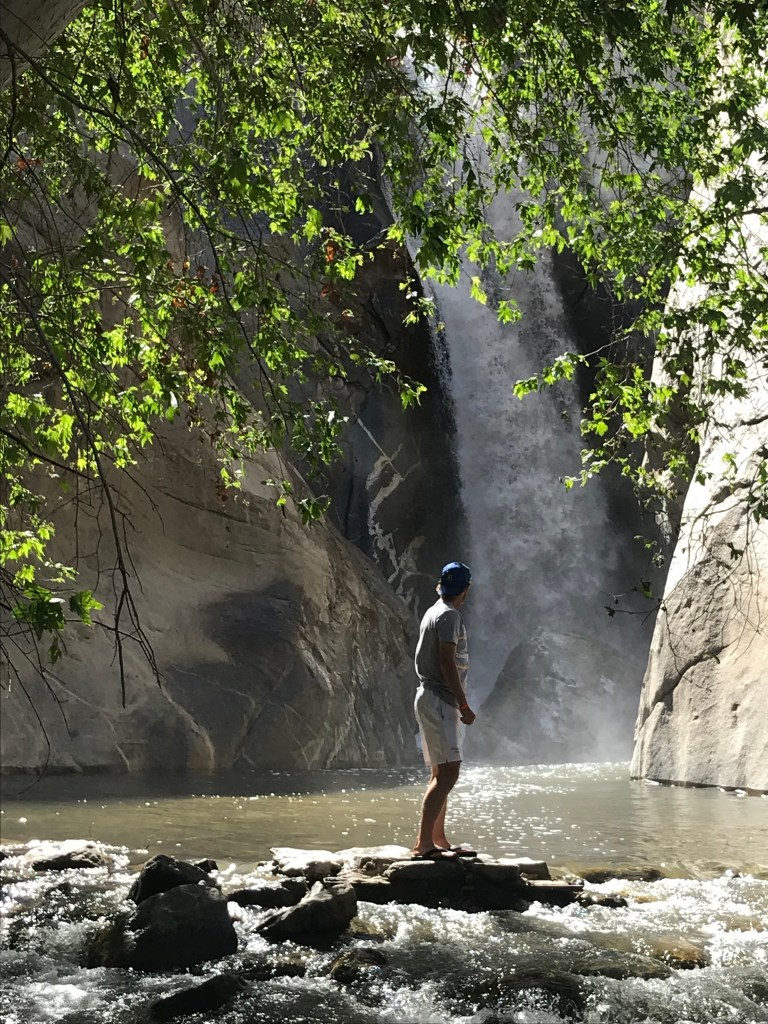
What is man that You are mindful of him?
We are all aware that plants and animals occupy distinct ecological niches. We know that various climates favor certain types of flora and fauna. We even travel the globe to encounter species that are not native to the areas where we live. But what ecological niche do humans occupy? Interestingly, humans inhabit the Arctic, the jungle, the desert, the mountains, and even space stations. Based on all this evidence, I think we have to conclude that humans don’t have a specific ecological niche. If this is true, then we need to ask ourselves what the heck we are doing here. Why would nature evolve creatures who are at best ecologically useless and at worst ecologically harmful?
Humans are blamed for all the planet’s ecological problems, yet remain the only ones capable of solving them. Some radical environmentalists think the world would be a better place if we got rid of all humans. While this is an extreme sentiment, it highlights the unique place humans occupy on this planet. We are simultaneously viewed as environmental villains and saviors. We are capable of paving paradise and putting up a parking lot, as well as curtailing construction and creating a conservation area. We cut down trees and endanger the Spotted Owl, but then repopulate the nearly extinct California Condor. We manufacture wasp traps but then make a movie about A Bug’s Life.
If the goal of evolution is to produce creatures best suited to their environment, then why don’t we feel at home on this planet? Why do we feel like earthbound strangers with heavenly travel plans? We behave as if we came down from on high and got our feet dirty rather than evolving from the ground up and somehow getting religion.
Interestingly, instead of embracing our naturally selected success, we seem obsessed with going to bat for the evolutionary underachiever. We step up to the plate for the Silver Back Gorilla, but then sadly watch as it callously spits sunflower seeds onto the floor of its ecological dugout, oblivious to the neighboring African children dying of starvation. No other species seems to care. No other creature behaves like us. Doesn’t that seem odd?
Is it possible that we humans were placed on this planet for reasons other than being cogs in an ecological machine?
In Genesis, God creates the earth in a sequentially good manner until he creates humans, then declares the world to be very good. If humans aren’t responsible for an ecological niche, then what is it about them that makes the world very good?
And God blessed them. And God said to them, “Be fruitful and multiply and fill the earth and subdue it and have dominion over the fish of the sea and over the birds of the heavens and over every living thing that moves on the earth.” (Genesis 1: 28)
It appears that what makes the world very good is the presence of creatures who have dominion over God’s creation. Dominion, however, does not mean exploitation. Rather, it is God’s charge to us to maintain the world’s very good status. The problem is that with great power comes great responsibility, and instead of acting in God’s stead, we began to act as if we were God.
When mankind fell, they grabbed nature’s curtain and pulled it down with them, but, sadly, as they tried to right themselves, they committed unspeakable wrong. In mankind’s zeal to fix, he has broken. In his desire to divinely caretake, he has become mortally negligent in his duties.
Paul explained that the Fall of mankind subjected creation to futility, placing it in bondage to decay. Nature, unable to remain silent, groans. Interestingly, the only creatures capable of hearing those sighs are humans. Paul made it clear that the solution to the problem was not to become better humans but to accept the responsibility of being sons of God. A broken world required a spiritual fix.
For the creation waits with eager longing for the revealing of the sons of God. For the creation was subjected to futility, not willingly, but because of him who subjected it, in hope that the creation itself will be set free from its bondage to decay and obtain the freedom of the glory of the children of God. For we know that the whole creation has been groaning together in the pains of childbirth until now. And not only the creation, but we ourselves, who have the firstfruits of the Spirit, groan inwardly as we wait eagerly for adoption as sons, the redemption of our bodies. (Romans 8: 19-23)
The reason we don’t have an ecological niche is that we were created to occupy a spiritual one. We weren’t created to be above the animals but to assume a place a little lower than the heavenly beings. We are called to be divine image-bearers, not monkeys’ uncles. God is mindful of us because we are image-bearers with a job to do. Although we often show up late for work and do a shoddy job, He knows that if we stop acting like employees and start acting like His sons and daughters, the family gardening business will once again thrive.
When I look at your heavens, the work of your fingers,
the moon and the stars, which you have set in place,
what is man that you are mindful of him,
and the son of man that you care for him?
Yet you have made him a little lower than the heavenly beings
and crowned him with glory and honor.
You have given him dominion over the works of your hands;
you have put all things under his feet,
all sheep and oxen,
and also the beasts of the field,
the birds of the heavens, and the fish of the sea,
whatever passes along the paths of the seas. (Psalm 8)

 God's Screenplay